
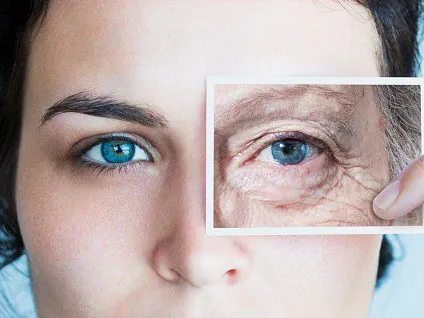
We age through a biological process influenced by genetics, environmental factors and lifestyle habits. In the skin it translates into three main changes: wrinkles, loss of volume and loss of density. The good news is that aesthetic medicine and surgery offer treatments for each of them. The key is a comprehensive, personalized approach, defined after a medical consultation.
The human being is designed to age. It is a natural process in which, besides the genetic factor, environmental factors and unhealthy lifestyle habits, which can speed it up, also play a part. Of all the changes that the passing of the years brings, those of the skin are the most visible. Understanding why they occur helps you choose well: that is why, when planning Facial rejuvenation in Girona, we always assess it from a comprehensive point of view.
Why skin ages
With age, the outer layer of the skin (epidermis) becomes thinner, collagen and elastin become more fragile and the skin loses its ability to retain water. Added to this are the effects of sun, tobacco, pollution and stress, which speed up the deterioration. The result is the signs we associate with facial ageing.
The three signs of facial aging
Facial ageing shows up mainly in three ways, and each one is addressed differently:
| Signo | What happens | Enfoques habituales |
|---|---|---|
| Wrinkles | Expression lines and fine wrinkles due to loss of elasticity | Treatment of expression lines, wrinkle fillers, mesotherapy |
| Loss of volume | The face "hollows out" at the cheekbones, temples and folds | Hyaluronic acid filler, facial lipofilling |
| Loss of density / firmness | The skin thins and sags; the facial oval loses definition | Tightening threads, radiofrequency and, in advanced cases, facelift |
The eyes, the first to give away your age
The skin around the eyes is very thin, so wrinkles and sagging show up sooner in this area. Over time, excess skin may appear on the upper eyelid or “bags” on the lower one, giving a tired or sad look; in some cases, the excess skin even interferes with the field of vision. To correct this, eyelid surgery removes the excess skin and the bags and rejuvenates the gaze.
How we approach rejuvenation: from prevention to surgery
There is no single "anti-aging" treatment: what works is combining treatments according to the predominant sign and the age of the skin.
- Prevention and skin quality: habits, sun protection, stable weight and mesotherapy with vitamins and hyaluronic acid.
- Wrinkles and volume: treatment of expression lines and filling with hyaluronic acid.
- Firmness: tightening threads and radiofrequency for mild to moderate sagging.
- Advanced sagging: facelift or blepharoplasty when the drooping or excess skin is significant.
Where do I start?
The best way to get it right is a facial consultation in which the specialist analyzes your skin and defines a tailored plan. As a guideline:
- If dehydration and fine lines predominate: medical-aesthetic treatments.
- If loss of firmness predominates: threads and radiofrequency.
- If there is sagging or marked bags: consider surgery (lift or blepharoplasty).
The indication is always established by the medical team after assessing you individually.
Resolve your case with the medical team
First medical consultation with no obligation, in Girona.
Frequently asked questions
Why do we age if cells renew themselves?
Can skin ageing be slowed down?
What anti-ageing treatment is best for me?
Surgery is recommended over aesthetic medicine when:* **More significant or dramatic results are desired:** Surgical procedures can achieve more substantial changes in appearance, such as lifting sagging skin, altering facial structure, or significantly reducing excess fat. * **Non-surgical options have been exhausted or are unsuitable:** If non-surgical treatments haven't produced the desired outcome or are not appropriate for the individual's concerns, surgery might be considered. * **Structural changes are needed:** For issues like severe jowl laxity, significant eyelid drooping, or notable breast asymmetry, surgery is often the only effective solution. * **Long-lasting or permanent results are sought:** While non-surgical treatments offer results, they are often temporary and require ongoing maintenance. Surgical procedures, when successful, can provide more permanent improvements. * **Deeper tissues need addressing:** Procedures like facelifts, brow lifts, and blepharoplasty work on deeper anatomical layers to achieve rejuvenation, which is beyond the scope of most aesthetic medicine treatments. * **The patient has realistic expectations and understands the risks:** Patients considering surgery must be well-informed about the potential outcomes, recovery time, and the inherent risks associated with surgical interventions, which are generally higher than with non-surgical treatments.
Blefaroplastia, often called an eyelid lift or eyelid surgery, is a surgical procedure to improve the appearance of the eyelids. It can address several issues, including:* **Excess skin and fat on the upper eyelids:** This can make the eyes look droopy and heavy, and can sometimes obstruct vision. * **Loose skin and wrinkles on the lower eyelids:** This can lead to bags under the eyes. * **Puffiness or bags under the eyes:** This is often caused by excess fat deposits.In essence, blepharoplasty aims to make the eyes look more youthful, rested, and alert by removing or repositioning excess skin and fat. It can be performed on the upper eyelids, lower eyelids, or both.
At what age should you start taking care of yourself?
Treatments and related units
Explore the clinic's facial rejuvenation treatments in Girona. Filter by area:
Sagging: lifting threads
Lifting effect and collagen stimulation with absorbable threads.
Hydration and nutrition
Mesotherapy with vitamins and hyaluronic acid to revitalise the skin.
Expression lines
Treatment of dynamic lines on the forehead, between the brows and crow's feet.
Related articles
We serve patients from all over the province of Girona
Our clinic is located in the centre of Girona (Plaça Poeta Marquina, 3) and we regularly see patients from the city and the entire surrounding area and the Costa Brava. If you are coming from further afield, we coordinate appointments to group assessments and tests on the same day.
Plaça Poeta Marquina, 3, 17002 Girona · easy access from the AP-7 and N-II · How to get there and opening times