

Eliminating cellulite “completely” is usually very difficult, but its appearance can be greatly reduced and improved. The strategy that works combines habits (balanced diet, hydration, exercise, rest) with medical treatments carried out in the clinic —such as mesotherapy, radiofrequency or anti-cellulite programmes— adjusted to each person's type of cellulite. There is no single or miraculous solution: what is effective is a personalised plan with several sessions and follow-up.
Cellulite, known as orange peel skin, is one of the most common aesthetic concerns, especially among women. If you want to improve the appearance of problem areas, the first step is to understand why it appears and what can really be done about it. For an individualised medical approach, see the Cellulite treatment in Girona and get your case assessed in a consultation.
Here you will find where it appears, which lifestyle changes help, what creams, mesotherapy, radiofrequency and exercise can offer, and how we treat cellulite at the clinic.
What cellulite is and where it appears
Cellulite is an irregular accumulation of fat in the fat cells, which grow in size as they store lipids. It is a condition of the subcutaneous fatty tissue: in mild cases it is only noticeable when pinching the skin; in more marked cases, the dimples and bumps are visible to the naked eye, giving that orange-peel-like texture.
As the volume of the adipocytes increases, the capillaries are compressed and drainage in the area worsens. It can appear in both slim and overweight people. The most prone areas are the legs, buttocks, hips and abdomen. Lifestyle (unbalanced diet, sedentary habits, stress), genetic factors and hormonal factors all play a role.
Lifestyle keys to reduce cellulite
Removing cellulite completely is usually very difficult, but certain changes help the skin look much better:
- Follow a balanced diet, with fruit, cleansing vegetables and pulses.
- Drink enough water to help eliminate toxins and avoid fluid retention.
- Do regular exercise (cardio and strength: squats, lunges…); a sedentary lifestyle is one of the main causes.
- Get enough rest and avoid tobacco and alcohol.
- Moderate coffee, sugar, refined flours and salt; replacing coffee with green tea is a good option.
- Avoid sitting for long periods: take breaks and walk.
- Reduce the use of high heels, narrow footwear or very tight clothing, which compromise venous and lymphatic return.
Medical treatments for cellulite: what each one offers
Beyond habits, aesthetic medicine offers techniques that act on fat, circulation and tissue quality. These are the most common ones and what they are used for:
| Treatment | How it acts | Session guidance* |
|---|---|---|
| Body mesotherapy | Microinjections of substances that help break down fat, improve circulation and tissue quality | Several sessions, depending on the assessment |
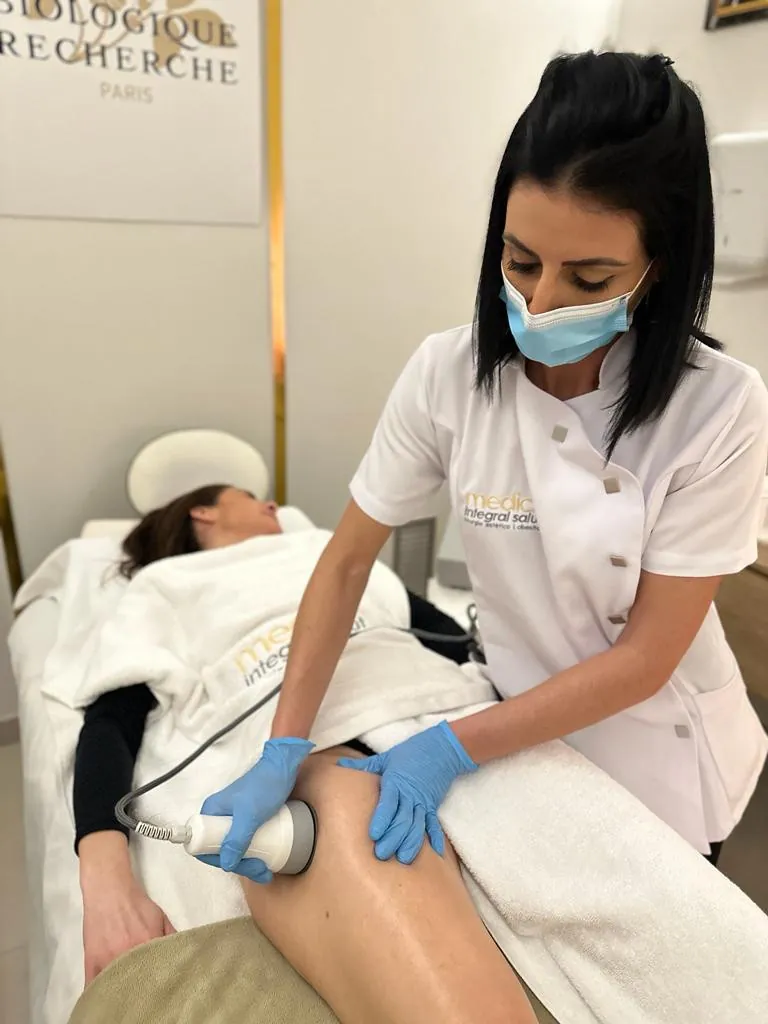
| Radiofrequency | Warms the deep layers of the skin, stimulates collagen and improves the firmness and appearance of dimples | En torno a 6–10 sesiones |
| Anti-cellulite programs in the treatment room | Lipolytic, lymphatic drainage and comprehensive protocols that combine actions on fat and drainage | Pauta personalizada |
| Cremas anticelulíticas | Support: they improve texture if applied correctly and consistently (ideally 2 times a day) | Continued use |
| Habits (diet, exercise, hydration) | Essential foundation: they boost and maintain the results of any treatment | Daily maintenance |
*The number of sessions is indicative and varies according to the degree of cellulite and each person's response. The specific schedule is set by the doctor after assessing you.
Do creams work?
Good-quality creams help improve skin texture if applied correctly and consistently. They work better with two applications a day (skin absorbs more at night) and a thorough massage of the area. They are a support, not a solution on their own.
What about mesotherapy?
Body mesotherapy is part of aesthetic medicine and is commonly used to combat cellulite on the legs, thighs and buttocks. Without surgery, substances are injected into the area to stimulate the tissue and promote the elimination of localised fat and toxins, improving hydration, tissue quality and circulation.
Does exercise help?
Yes, and a lot: exercise activates the metabolism, firms the skin, burns fat and improves circulation. Aerobic exercises help reduce fat and toning exercises improve the appearance of the skin. Consistency is what makes the difference.
How we treat cellulite at Medics Integral Salut
The treatment depends on each person's type of cellulite. Our approach:
- Prior diagnosis of the condition to understand what type of cellulite you have.
- Tailored programme to reduce body fat and improve tissue tone.
- We tell you the necessary number of sessions, with no anaesthesia or hospitalisation and with immediate recovery after each session.
- Techniques such as the triple-action lipolytic, lymphatic drainage, anti-cellulite and comprehensive treatment.
- Lifestyle recommendations to secure and maintain the results.
The goal is realistic: to improve and reduce cellulite, not to promise that it will disappear completely. See also non-surgical liposuction →
Resolve your case with the medical team
Diagnosis of your type of cellulite and personalised plan, in Girona.
Frequently asked questions
Can cellulite be completely eliminated?
What is the most effective treatment?
How many sessions do I need?
Do the treatments hurt or require time off work?
Do anti-cellulite creams work on their own?
How much does cellulite treatment cost?
Treatments and related units
Explore the treatments for Body Aesthetic Medicine Unit and other areas of the clinic. Filter by area:
Eliminar celulitis (cabina)
Anti-cellulite protocols from the aesthetics treatment room.
Related articles
We serve patients from all over the province of Girona
Our clinic is located in the centre of Girona (Plaça Poeta Marquina, 3) and we regularly see patients from the city and the entire surrounding area and the Costa Brava. If you are coming from further afield, we coordinate appointments to group assessments and tests on the same day.
Plaça Poeta Marquina, 3, 17002 Girona · easy access from the AP-7 and N-II · How to get there and opening times