
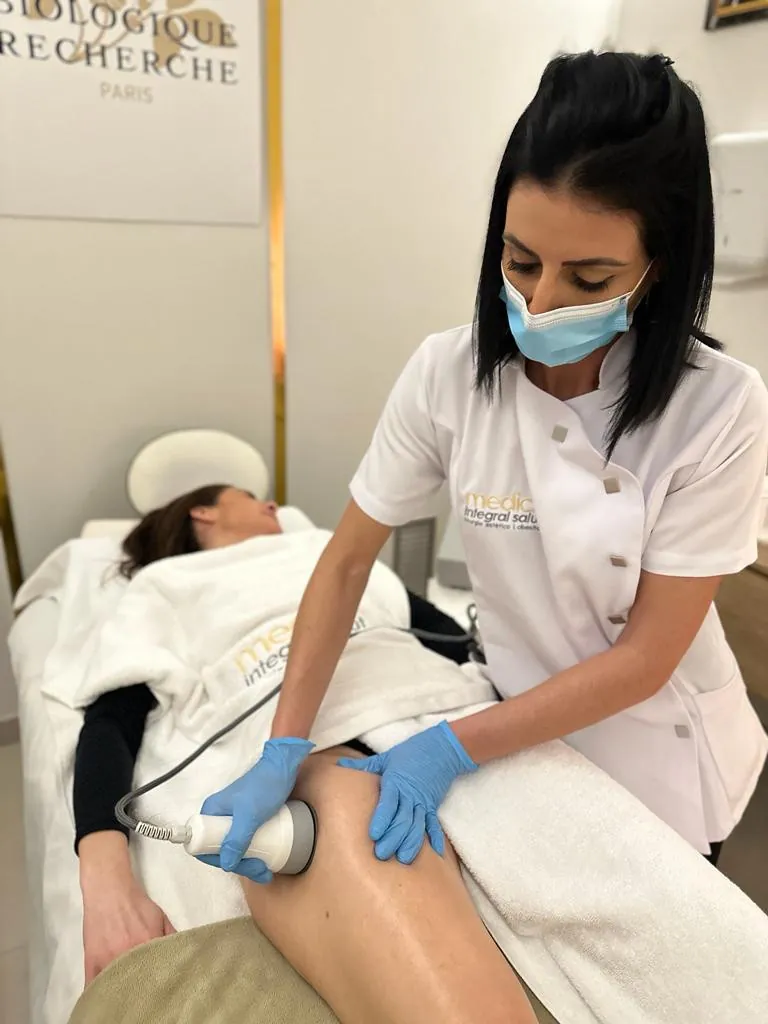
Radiofrequency is one of the most recommended treatments for sagging skin, on the face and body, because it heats the deep layers of the skin and stimulates collagen production, improving its firmness and elasticity. It is non-invasive, safe and requires no recovery time. Results are progressive (they are seen over several sessions and weeks) and require maintenance. Not all equipment or all professionals offer the same result: qualification and technology are decisive.
From the age of 40, one of the biggest concerns is skin sagging, both facial and body. In our aesthetic clinic we recommend radiofrequency for several reasons that you will see below. If you want a plan tailored to your case, find out about our sagging treatment in Girona and get your questions answered at a consultation.
We explain how radiofrequency works, which areas it is used on, how many sessions are usually needed, when the results are noticeable, what contraindications it has and what the price depends on.
Why radiofrequency helps with sagging
Radiofrequency is a non-invasive treatment that acts on the deep layers of the skin. These are the main reasons it is recommended:
- Collagen stimulation: it heats the deep layers of the skin, which stimulates the production of collagen, a protein essential for elasticity and firmness. Over time, this collagen improves the structure of the skin, which looks firmer and more toned.
- Improved elasticity: by promoting collagen and elastin, it helps the skin regain its ability to retract, which is especially useful after pregnancy, weight loss or with the passing of years.
- Reduction of sagging: it tightens and tones the skin, which is useful on the face, neck, arms, abdomen and thighs, where sagging is most evident.
- Non-invasive results: unlike surgery, it does not require significant recovery time, which makes it an attractive option for improving the skin without going to the operating theatre.
- Safety: it is a safe procedure that most people tolerate well; complications are rare and the risk of side effects is low, provided it is performed by a qualified and experienced professional.
In short, radiofrequency firms the skin because it is an effective, safe and non-invasive treatment that stimulates collagen and improves elasticity and firmness, with visible and lasting results. However: not all radiofrequency devices offer the same results, and they must be applied by qualified professionals. At our clinic we carefully select both the devices and the staff so that every patient gets the best possible result.
Treatment areas and what to expect
Radiofrequency is used on both the face and the body. This table summarises where it is applied and what to expect:
| Appearance | Detail |
|---|---|
| Zonas faciales | Face and neck, to firm and improve skin tone |
| Zonas corporales | Arms, abdomen and thighs, where sagging is usually most visible |
| When results become noticeable | They are progressive: they start to be noticeable during the first weeks and keep improving over the following months |
| Sesiones orientativas* | Usually around 6–10 sessions are planned, depending on the area and the case |
| Recovery | No downtime required; normal activity resumes immediately |
| Maintenance | As ageing continues, periodic maintenance sessions are recommended |
*The number of sessions and the maintenance schedule are indicative; they are set by the professional after assessing you. Results vary from person to person.
Contraindications and precautions
Although it is a safe and well-tolerated treatment, radiofrequency is not suitable in every case. It should be considered with caution (or avoided) in situations such as: having a pacemaker or other implanted electronic devices, Pregnancy, active infections or lesions in the area to be treated, and certain skin disorders. That is why a prior consultation is essential: the professional will confirm whether it is suitable in your case.
When is radiofrequency recommended?
As a general guide, it is usually a good option for people who:
- Note Mild to moderate sagging in the face, neck, arms, abdomen or thighs.
- It seeks to firm up without surgery and without recovery time.
- Wants to improve the skin after a pregnancy, weight loss or with the passing of the years.
- Understand that results are progressive and that maintenance is advisable.
If the sagging is very marked or there is a lot of excess skin, the professional will assess whether radiofrequency is enough or whether it is better to combine it with other options, such as tightening threads or surgical treatment. Discover the facelift →
Resolve your case with the medical team
Assessment of your sagging and a tailor-made session plan, in Girona.
Frequently asked questions
How many radiofrequency sessions do I need?
When are the results noticeable? Are they permanent?
Does it hurt? Is there a recovery time?
Is it suitable for the face and body?
Who should not have radiofrequency?
How much does it cost and what does the price depend on?
Treatments and related units
Explore the treatments for Aesthetic Medicine Unit and other areas of the clinic. Filter by area:
Neck and double chin mini-lift
Improves neck sagging and the contour of the jowl area.
Related articles

We serve patients from all over the province of Girona
Our clinic is located in the centre of Girona (Plaça Poeta Marquina, 3) and we regularly see patients from the city and the entire surrounding area and the Costa Brava. If you are coming from further afield, we coordinate appointments to group assessments and tests on the same day.
Plaça Poeta Marquina, 3, 17002 Girona · easy access from the AP-7 and N-II · How to get there and opening times