
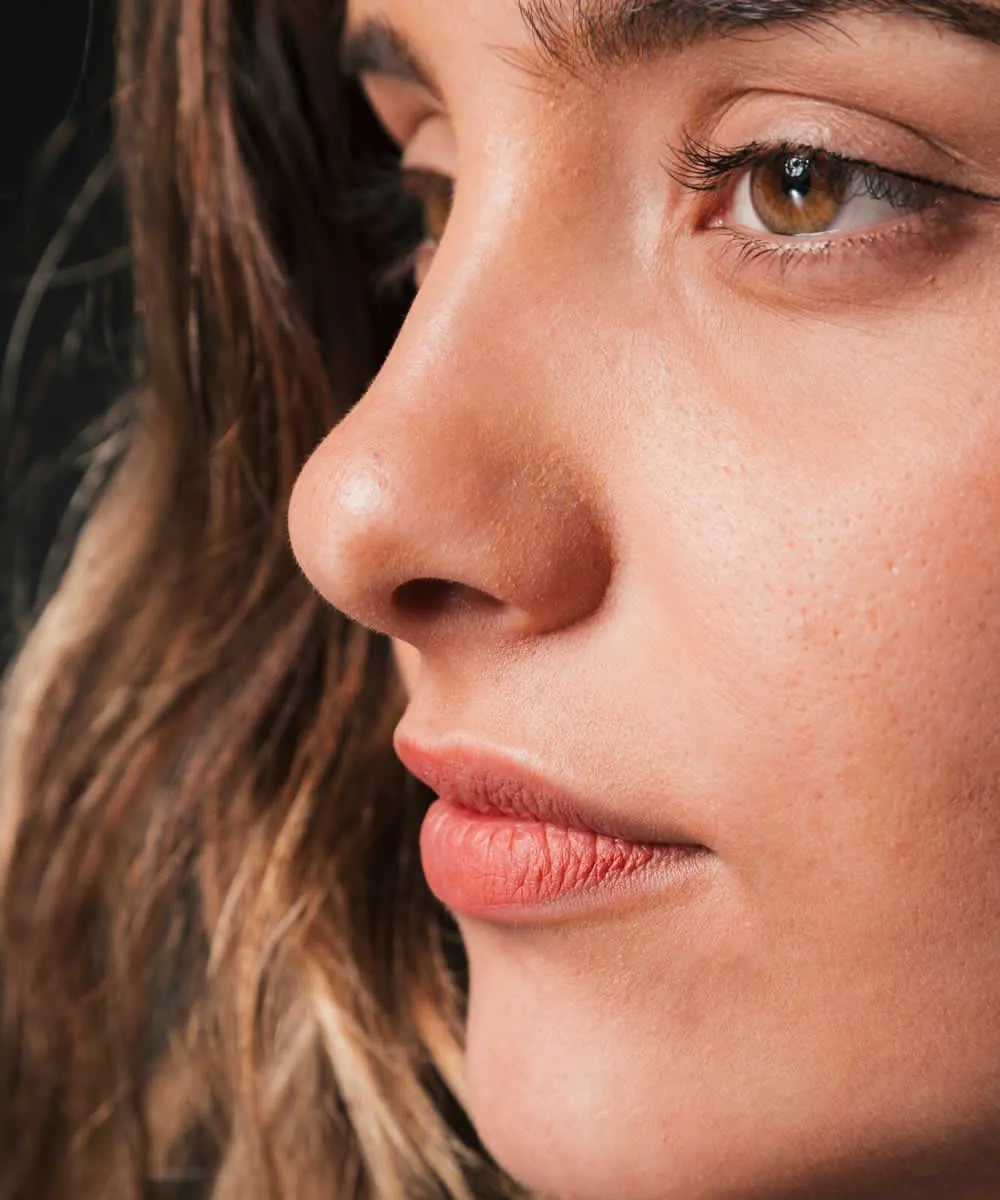
Rhinoseptoplasty is a nose surgery that combines rhinoplasty and septoplasty in a single procedure: it improves the external shape and corrects the septum to breathe better. It is considered when an aesthetic concern and a functional problem coincide. It is surgery: it requires anaesthesia, planning and a gradual postoperative period.
Rhinoseptoplasty is the surgery that combines, in a single procedure, the aesthetic part of a rhinoplasty with the functional part of a septoplasty. It is the option considered when a person has, at the same time, a concern about the shape of the nose and difficulty breathing, usually related to the septum. In this guide we explain what it is, how it differs from rhinoplasty and septoplasty, when it is recommended, who is a good candidate, what the operation is like, recovery week by week, the risks, the price and from what age it can be considered.
It is one of the most searched questions by people who are starting to look into nose surgery, and it makes a lot of sense: the terms rhinoplasty, septoplasty, rhinoseptoplasty and septorhinoplasty are so similar that it is easy to mix them up. The practical difference, however, is clear: one technique changes how the nose looks, another improves how you breathe, and rhinoseptoplasty does both at once. Understanding this well before deciding is the best way to arrive at the consultation with the right questions and to avoid having surgery expecting a result that this technique simply does not aim for.
It is worth making one thing clear from the outset: nothing you read here replaces a medical assessment. Rhinoseptoplasty is real surgery —with anesthesia, planning and a postoperative period that demands patience— and whether it is indicated depends on your anatomy, your symptoms and your goals. If you are considering nose surgery that takes both aesthetics and breathing into account, you can have your case studied in the Rhinoplasty in Girona unit.
What is a rhinoseptoplasty
A rhinoseptoplasty is a surgical procedure that modifies the external structure of the nose and, at the same time, corrects internal alterations that can hinder the passage of air. The aesthetic part focuses on improving facial harmony; the functional part aims to help the patient breathe better through the nose. It combines Rhinoplasty (shape, size and proportions) with septoplasty (correction of a deviated or obstructive septum). It is neither purely cosmetic nor purely functional surgery: it is a combined procedure.
To understand it, it helps to think of the nose as a structure with two “layers”: an external envelope (skin, nasal bones and the cartilages that shape it) and an interior through which air flows (the septum that divides the two nasal cavities, the turbinates and the nasal valves). Rhinoplasty mainly works on the external envelope; septoplasty works on the interior; rhinoseptoplasty addresses both in the same surgical procedure. That is why it is considered the most complete option when the problem is not just “I don't like my nose” nor just “I can't breathe well”, but both at once.
The word itself says it all: rhino- (nose) + septo- (septum, from the Latin septum) + -plasty (to reshape or give form). In other words, reshaping the nose and the septum in a single surgery. That is why many noses deviated after a blow are corrected with this technique and not with an isolated septoplasty: when the trauma has twisted both the septum on the inside and the nasal pyramid on the outside, fixing only one part would leave the problem half-solved.
Are rhinoseptoplasty and septorhinoplasty the same thing?
Yes. Rhinoseptoplasty and septorhinoplasty are synonyms: both describe the same surgery, the one that corrects at once the septum (functional part) and the external shape of the nose (aesthetic part). The only thing that changes is the order of the word roots —sometimes rhino- (nose) comes first and sometimes septo- (septum)— but the procedure is the same. You will find both forms in articles, quotes and medical reports, and you should not assume they refer to different operations.
Septorhinoplasty is sometimes used to stress that the main reason was functional (the septum) and the opportunity was taken to improve the aesthetics, and rhinoseptoplasty when the starting point was aesthetic and breathing was corrected as well. In practice, this distinction is more a matter of nuance than of technique. What really matters is not the name, but that your consultation records in writing what is going to be corrected and why: which part is functional, which part is aesthetic and what result is reasonable to expect.
Difference between rhinoplasty, septoplasty and septorhinoplasty
Although the names are similar, they do not mean the same thing:
| Procedure | Main objective | Changes the appearance | Improve your breathing |
|---|---|---|---|
| Rhinoplasty | Improve the external shape of the nose | Yes | No siempre |
| Septoplasty | Correct the nasal septum | Not necessarily | Yes |
| Septorhinoplasty | Improve aesthetics and nasal function | Yes | Yes |
To learn more about the aesthetic side, you can read What is a rhinoplasty, and to better understand the choice, this guide on Rhinoplasty or septoplasty.
The most useful difference for deciding is this: rhinoplasty answers “I don’t like how my nose looks”; septoplasty answers “I can’t breathe well through my nose”; and rhinoseptoplasty answers “both things are happening to me”. If you only identify with one of the statements, you probably do not need a combined surgery. If you identify with both, your case very possibly fits a rhinoseptoplasty better, although the examination always confirms this.
Septoplasty and turbinoplasty: the role of the turbinates
When someone “can't breathe well through the nose”, a deviated septum is a very common cause, but not the only one. Inside the nostrils there are structures called turbinates, which warm and humidify the air; if they are enlarged — due to allergy, chronic rhinitis or naturally — they reduce the space the air passes through even if the septum is straight. That is why, in many functional surgeries, septoplasty is accompanied by a turbinoplasty (reduction or repositioning of the turbinates) in the same operation.
When that functional part —septoplasty with or without turbinoplasty— is combined with external reshaping, we speak of septorhinoplasty. Whether in your case it is necessary to work on the septum, the turbinates or both is decided at the examination: not all blocked noses need the same thing, and not every deviated septum or enlarged turbinate justifies surgery. The indication depends on there being a real obstruction that affects your day-to-day life, not just a finding at the examination.
Does rhinoseptoplasty change the outside shape of the nose? Is it noticeable?
Yes, and that is precisely one of its differences from isolated septoplasty. Here it is worth separating two ideas that people often search for separately:
- Septoplasty alone works on the inside, on the septum, and does not normally change the external shape or show on the outside: its aim is to help you breathe better, not to redesign your profile. Anyone with a deviated septum who also expects their nose to be “straightened” on the outside may be disappointed if only the septum is operated on.
- Septorhinoplasty does change the external appearance, because it includes the rhinoplasty part: it can reduce a hump, refine the tip, correct a visible deviation or improve the proportion with the rest of the face. In this case, the aesthetic change is noticeable, and that is usually one of the reasons why it is chosen over an isolated septoplasty.
Put another way: if you are worried that «nothing will show on the outside», with a functional septoplasty that is what you can expect; if what you want is precisely for the appearance to also improve in addition to breathing, the technique that pursues that dual goal is rhinoseptoplasty. What neither of the two does is change your face: the goal is a nose in proportion to your face, not a nose identical to someone else's.
Is a rhinoseptoplasty worth it?
The honest answer is: it is worth it when there is a real breathing obstruction that affects your rest, your performance or your quality of life and, in addition, you want to correct an aspect of your nose that bothers you. In that scenario, solving both things in a single surgery —with a single anaesthetic and a single recovery— is usually more efficient than having two operations. Many patients say they “finally sleep better” or that they “stop breathing through their mouth when exercising”, and that functional change is the one that is most appreciated over time.
It is not worth as much if the problem is only aesthetic and mild and you breathe perfectly: in that case there is no functional reason to open the septum, and a rhinoplasty or even a non-surgical alternative for minor details may be enough. Nor is it a good idea to “take the opportunity” to alter the shape if it doesn’t bother you, or to operate on a septum that causes no symptoms just because it appears deviated on an X-ray. The key is that the indication fits a problem that genuinely limits you, not a trend or a photo. This “cost-benefit” assessment is individual and is made by the medical team together with you.
What it is for and what it corrects
Rhinoseptoplasty serves to improve the nose from two perspectives: how it looks and how it works.
Parte funcional
It makes it easier for air to pass through the nostrils and allows a deviated septum to be corrected, which reduces the space through which air flows. It is important for patients who breathe worse on one side, sleep with their mouth open or habitually feel their nose is blocked.
Aesthetic part
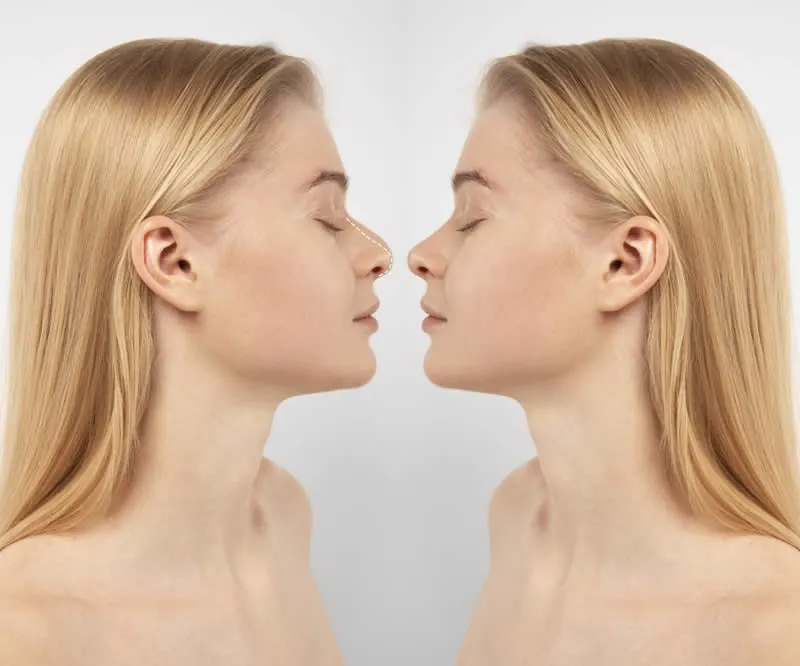
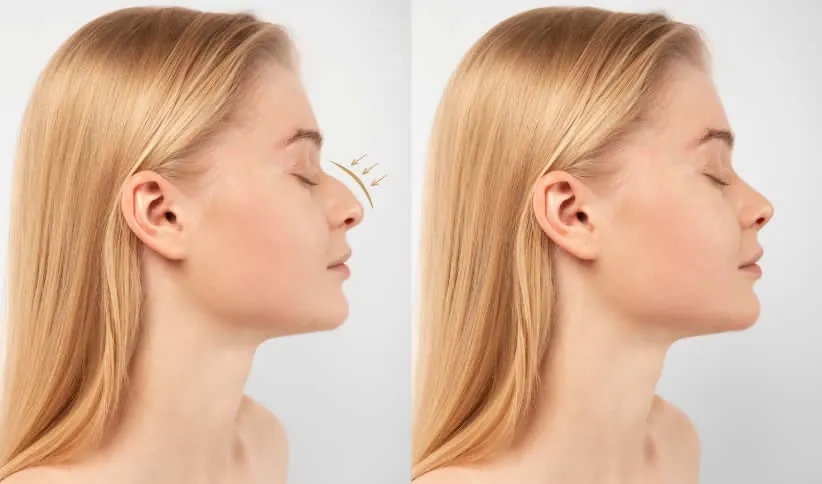
It can improve the nasal profile, tip, width, projection, symmetry and proportion with the lips, chin and forehead. In crooked noses it is often considered, because if only the visible part is corrected and not the septum, the result may be incomplete. The goal should not be a “catalogue” nose, but one that suits the face.
When a rhinoseptoplasty is recommended
It may be recommended when a functional problem and an aesthetic one coincide. Some common situations:
- Difficulty breathing through the nose: constant obstruction, worse on one side, or needing to breathe through the mouth.
- Deviated septum that affects breathing (not every deviated septum requires surgery).
- Crooked nose caused by an injury, with external and internal deviation.
- A hump or drooping tip that you want to correct and, in addition, breathing problems.
- Desire to improve both appearance and function in a single procedure, with a single recovery.
What a rhinoseptoplasty operation is like
It requires planning: it is not just about "straightening" the nose, but about working on structure, function and aesthetics. Before operating, the external shape, septum, nasal patency, respiratory history, trauma, previous surgeries, skin and facial proportions are assessed. It is usually performed under general anaesthetic, although the indication depends on the case. The technique can be open (a small incision on the columella, greater visibility) or closed (incisions inside the nose). The functional part may include repositioning or correcting the septum, and the aesthetic part, reducing a hump, modifying the bridge, defining the tip or adjusting the width. At the end, a nasal splint is usually placed and, in some cases, packing or internal supports.
The open technique is usually preferred in significant deviations, secondary surgery, a complex tip, the need for grafts or marked asymmetries. The decision must be based on the examination, not on a generic preference.
Anesthesia, duration and admission
These are the most practical questions before surgery, and they are best answered with nuance because they depend on the case:
- Anaesthesia: rhinoseptoplasty is usually performed under general anaesthetic. A preoperative work-up (blood tests, anaesthesia assessment and, depending on your age and medical history, other tests) is carried out before surgery to confirm that you can safely undergo it.
- Duration: it is approximate and depends on the complexity. A simple functional procedure may be completed in a little over an hour, whereas a full rhinoseptoplasty —with external remodelling, septum correction, turbinates and even grafts— may take two or three hours. A longer surgery does not mean that «something is going wrong»: it usually reflects that more meticulous work is being done.
- Admission: in many cases it is surgery without hospital stay (outpatient) or with one night of observation, depending on the team's protocol, the type of anaesthesia and how you progress on waking up. You are discharged when you are stable and the instructions are clear.
- Splint and nasal packing: at the end of the procedure an External splint is usually placed to protect and stabilise the nose during the first few days, and in some cases internal elements (sheets or packing) that are removed at the first check-ups.
Today it is common to rely on the ultrasonic technique to reshape the bone with greater precision and, potentially, less bruising. It is not essential in every case, but it is one of the options the surgeon may suggest depending on your anatomy.
Rhinoseptoplasty recovery week by week
Along with the price, this is the thing people search for most. Recovery depends on the type of surgery and on each person, but there is a fairly recognisable pattern. The most important thing to take on board: for weeks you will see a swollen nose that does not represent the final result. Impatience is normal; the definitive nose takes time to appear.
Days 1 to 3: the most uncomfortable
In the first few days, swelling, a feeling of a blocked nose (caused by internal congestion, not because it “isn’t working”) and, often, bruising or “black eyes” around the eyes predominate. There may be facial pressure and tiredness. The usual guidance is relative rest, head elevated and the prescribed medication. Don’t expect to breathe wonderfully just yet: initial congestion is to be expected even if the septum has already been corrected.
Days 4 to 7: the splint is removed
Around the first week the splint is usually removed and, depending on the case, so are internal elements. It is a psychologically important moment, but remember: the nose is still swollen and what you see that day is not the result. Many patients can already return to light tasks and, often, a discreet social life.
Weeks 2 to 4: return to normal life
A good part of your daily life returns to normal in these weeks: office work, going out, driving when you feel well. The precautions to avoid knocks and intense exertion remain. Breathing usually improves progressively as the internal swelling goes down; in many cases this is when you start to “feel the air”.
From 1 to 12 months: the result settles
The swelling goes down gradually, and the tip is the area that takes the longest (sometimes several months, up to nearly a year, to fully take shape). What is sometimes perceived as “hardness” is fibrosis, a residual inflammation of the tissue that usually improves over time and, if needed, with the measures your surgeon indicates. The final aesthetic result is assessed calmly, not after a few days.
Practical day-to-day questions
- How to sleep on your back with your head elevated during the first few weeks, to reduce swelling and protect the area; it is best to avoid sleeping on your side or putting pressure on your nose.
- When you breathe well: progressively. In the first few days the nose is congested; the real improvement in breathing is usually noticeable as the swelling goes down over the following weeks, not on the first day.
- What to eat: a soft, lukewarm diet for the first few days if there is discomfort, avoiding very hot foods or foods that require a lot of chewing, and staying well hydrated. Afterwards, you return to your normal diet.
- How to clean and blow your nose: do not blow your nose in the first weeks; cleaning is done gently with saline solution as you are instructed. Blowing hard can promote bleeding and compromise healing.
- When to exercise: it is resumed gradually, usually from 3-6 weeks as indicated by the doctor, starting with gentle exercise and leaving contact, heavy loads or any risk of a blow to the nose for later.
- Sun, glasses and tobacco: it is advisable to protect the nose from the sun for the first weeks, avoid the weight of glasses on the bridge if you are told to, and not smoke, because tobacco hinders healing.
Rhinoseptoplasty recovery, phase by phase
Recovery requires patience: at first there is swelling, congestion and visible changes that do not represent the final result.
| Phase | What usually happens |
|---|---|
| Early days | Swelling, bruising, congestion, nasal pressure and tiredness; relative rest |
| First week | Check-ups and, depending on the case, removal of the splint or support elements; nose still swollen |
| First month | Much of everyday life is resumed, avoiding knocks and intense effort |
| Varios meses | The swelling goes down progressively (the tip takes longer) and the result stabilizes |
Care: sleep with your head elevated, avoid sports and exertion until the surgeon authorizes it, and attend the check-ups. Many of the recommendations coincide with those for Rhinoplasty recovery.
Before your operation: study and preparation
Good surgery starts long before the operating theatre. The consultation looks at two aspects at once —how the nose looks and how it works when breathing— and usually includes an examination of the septum, turbinates and nasal valve, a review of your history (trauma, previous surgeries, allergies), a study of the skin and an analysis of facial proportions with photographs. It is the moment to set out your goals with realistic expectations and to resolve any doubts without rushing.
In the days leading up to it, the team usually recommends stopping smoking (tobacco hinders healing), avoiding anti-inflammatories and drugs that promote bleeding unless expressly instructed otherwise, and organising your postoperative period: plan a few days of rest, someone to accompany you on the day of surgery and comfortable clothing that does not have to be pulled over your head. If you take anticoagulants or have a chronic illness, mention it from the first visit so that the preparation can be adjusted.
Is rhinoseptoplasty dangerous? Risks and safety
Performed by a qualified team and after an adequate assessment, nasal surgery is a common procedure with a good safety profile. That said, like any surgery it carries risks worth knowing about so you can decide with full information:
- Bleeding and infection: uncommon with the right precautions, but possible; they are part of any procedure.
- Prolonged swelling and bruising: to be expected to some degree; they subside over time.
- Fibrosis: residual tissue inflammation, especially in the tip, which can be felt as "hardness" and usually improves progressively.
- Bone callus or irregularities: during healing, a small bump or irregularity may form on the bridge which, in some cases, requires a minor touch-up.
- Persistence or recurrence of the obstruction, asymmetries or septal alterations, including — infrequently — a nasal septal perforation.
- Improvable result: when the result does not fully meet expectations, there is revision (secondary) septorhinoplasty or rhinoplasty, technically more demanding and best not rushed: it is usually advisable to wait until the swelling has fully resolved before considering any touch-up.
The best way to reduce risks is to choose your surgeon carefully, honestly report your history and medication, and carefully follow the postoperative instructions. If warning signs appear —heavy bleeding, fever, severe pain that does not subside or sudden difficulty breathing— you must contact the medical team.
Price of rhinoseptoplasty and coverage
There is no single figure. The price depends on the aesthetic complexity, the degree of septal deviation, the need to work on the turbinates or use grafts, the technique (for example, ultrasonic), the operating theatre, the anaesthesia and the follow-up. A rhinoseptoplasty, by combining two approaches, usually involves more work than an isolated septoplasty. Any fixed price you see advertised without having been examined is, at most, approximate: the real quote is detailed after the consultation. To get an idea of what influences the cost, see How much does a rhinoplasty cost in Spain.
One point many people ask about is coverage. It is worth separating the two parts of the surgery:
- The functional part —correction of the septum (septoplasty) and, where appropriate, of the turbinates, when there is a diagnosed breathing obstruction— may be covered by public healthcare or health insurance as functional surgery, because it treats a health problem.
- The aesthetic part —changing the shape, reducing the hump, refining the tip— is considered private and is not included in that functional coverage.
In a rhinoseptoplasty it is worth clarifying beforehand and in writing which part is functional and which part is aesthetic, to avoid surprises. And beware of a common myth: having your septum operated on for functional reasons does not mean that «while they're at it» they will change the shape for free; the aesthetic part is assessed and quoted separately. For that private part, at the clinic you can ask about funding options and spread the cost in instalments, something worth considering alongside the detailed quote after the consultation. Rhinomodelling without surgery can refine small external details in very specific cases, but it does not correct the septum or the internal obstruction, so it is not an alternative when there is a functional problem.
At what age it can be done and how to choose a surgeon
The aesthetic part is usually postponed until the nose has finished growing, roughly from 16-18 years of age, so as not to interfere with development. The functional part (septoplasty) can be considered earlier if there is a significant obstruction affecting rest or development, always on medical grounds and on an individual basis. There is no fixed maximum age: in adults, more than the number, what matters is general health and that there is a clear indication.
To choose a surgeon, a few sensible checks:
- That they are a registered specialist with specific training in nasal surgery (plastic surgery or otolaryngology, depending on the case).
- That the assessment looks at both aesthetics and breathing at the same time, not just one of the two.
- That they show you real cases before and after with comparable lighting and angles, and explain what is reasonable to expect in your case.
- That they clearly inform you of the risks, alternatives and post-operative period, and give you an informed consent form and an itemised quote.
- That they do not promise a “catalogue” result: the best goal is a natural nose, in proportion to your face, that also breathes well.
You can do so at the rhinoplasty unit in Girona, where the consultation looks at the shape of the nose as well as the septum and breathing.
Common myths about septorhinoplasty
There are misconceptions about nose surgery that are worth clearing up before deciding:
- “Septorhinoplasty and rhinoseptoplasty are different operations”. No: they are synonyms; they describe the same combined surgery on the septum and the external shape.
- “If I have my septum operated on, they'll change the shape for free on the public health system.” The aesthetic part is not included in functional coverage; it is assessed and quoted separately.
- “You see the result when the splint comes off.” What you see then is a nose that is still swollen; the real result, especially at the tip, takes months.
- “Rhinomodelling is a septorhinoplasty without surgery”. No: it is a temporary touch-up for minor details; it does not correct the septum or improve breathing.
- “The more you change, the better.” The best result is usually the most natural one, in proportion to your face, not the most striking.
- “It is minor surgery, of no importance”. It is real surgery, with anaesthesia and a postoperative period that requires patience; it should be taken seriously.
- “Price is the only thing to compare”. The team's experience, the functional assessment and the follow-up weigh more than a few euros of difference.
Alternatives when the problem is only aesthetic
If you breathe well and your only concern is shape, it is not always necessary to open the septum: a Rhinoplasty focused on aesthetics may be enough. And in mild aesthetic cases —a small irregularity of the dorsum or a tip you want to disguise— a non-surgical alternative such as Rhinomodelling may be considered, a temporary touch-up with filler materials in selected cases. None of these options replaces rhinoseptoplasty when there is a functional problem: if you cannot breathe well because of the septum or the turbinates, filler will not solve it. The decision between one route and the other is made after the examination, comparing what you are looking for with what each technique can offer.
Who is a good candidate for a rhinoseptoplasty?
Not everyone who wants to change their nose needs it. It usually suits someone who has both a functional and an aesthetic problem:
- Breathing difficulty with a deviated septum or nose.
- Alterations due to trauma that affect both the inside and the outside.
- A realistic aesthetic concern and a wish to improve both shape and function at the same time.
It may not be the best option if the problem is only cosmetic and mild, if there is no clear functional impairment or if expectations are unrealistic. The consultation is carried out by the medical team. Have your case assessed at the rhinoplasty unit in Girona →
Resolve your case with the medical team
First consultation for aesthetic and functional nose surgery, in Girona.
Related video
Rinoplastia ultrasónica: tipos de rinoplastia · Watch on our YouTube channel
Frequently asked questions
What is a rhinoseptoplasty in simple terms?
Are rhinoseptoplasty and septorhinoplasty the same thing?
Does rhinoseptoplasty improve breathing?
What is the difference from a rhinoplasty?
What is the difference from a septoplasty?
When is a rhinoseptoplasty needed?
What is a turbinoplasty and when is it added?
Does rhinoseptoplasty change the outside shape of the nose? Is it noticeable?
Is a rhinoseptoplasty worth it?
What anaesthesia is used and how long does the operation last?
Does it require hospital admission?
How do you sleep after a rhinoseptoplasty?
When can you breathe well and when can you exercise?
How should I clean and blow my nose after surgery?
Is the recovery very painful?
Is rhinoseptoplasty dangerous?
What are fibrosis and bone callus after surgery?
What if I don't like the result? Is there revision surgery?
How much does a rhinoseptoplasty cost?
Is it covered by social security or insurance?
At what age can a rhinoseptoplasty be performed?
How do I choose a surgeon for a rhinoseptoplasty?
Can rhinomodelling replace a rhinoseptoplasty?
Treatments and related units
Explore the treatments for Facial Cosmetic Surgery Unit and other areas of the clinic. Filter by area:
Rhinoplasty in Girona
Aesthetic and functional nose surgery, also with the ultrasonic technique.
Neck and jowl mini lift
Neck and double chin treatment with less surgical aggression.
Related articles

We serve patients from all over the province of Girona
Our clinic is located in the centre of Girona (Plaça Poeta Marquina, 3) and we regularly see patients from the city and the entire surrounding area and the Costa Brava. If you are coming from further afield, we coordinate appointments to group assessments and tests on the same day.
Plaça Poeta Marquina, 3, 17002 Girona · easy access from the AP-7 and N-II · How to get there and opening times
Medical review Content created by the medical team at Medics Integral Salut and reviewed by the Facial Aesthetic Surgery Unit.
Sources and references: Spanish Society of Plastic, Reconstructive and Aesthetic Surgery (SECPRE) · Spanish Society of Otorhinolaryngology and Head and Neck Surgery (SEORL-CCC).