
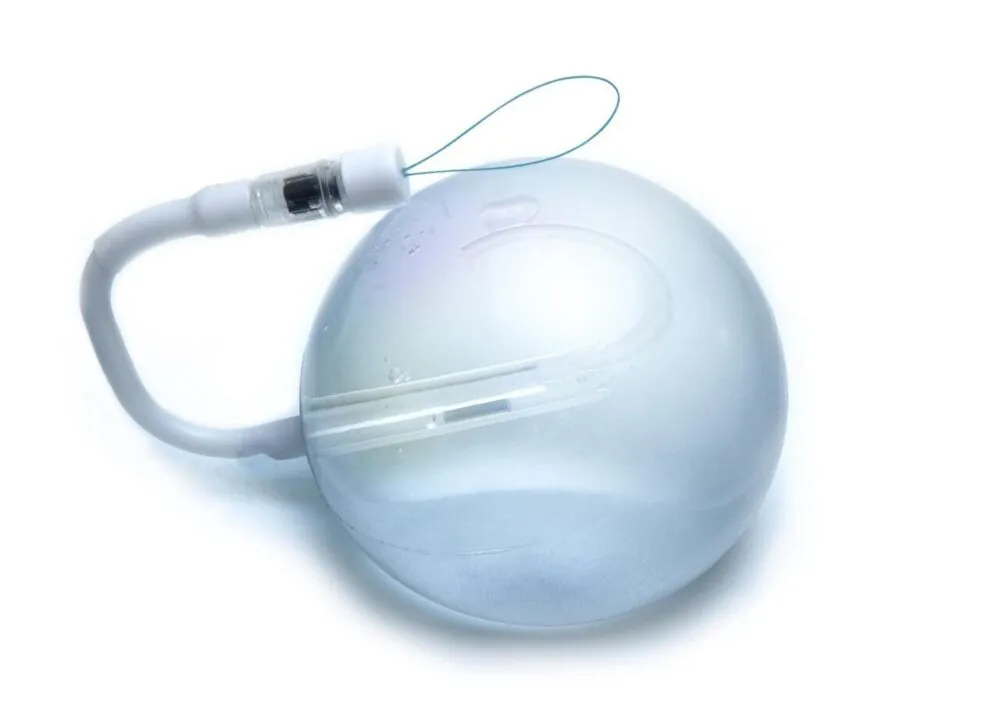
At Medics Integral Salut the gastric balloon in Girona has a guide price of 3.500 € – 5.500 €. That range includes the initial medical and nutritional consultation, placement under sedation with endoscopy and follow-up check-ups. The final price depends on the type of balloon (6 or 12 months) and the follow-up included. The gastric balloon is a medical procedure: it requires a prior consultation to confirm that it is suitable in your case.
When someone looks up how much a gastric balloon costs, the natural thing is to look for a figure. But in a weight-loss treatment, the useful question is not just how much, but what that price includes and whether it is right for your case. Here we explain it clearly, with the clinic's guideline range and the factors that make it vary, as well as what exactly the balloon is, how it is placed, what types exist and who it is indicated for.
What a gastric balloon is and what it is for
The gastric balloon is a soft, flexible silicone medical device that is placed in the stomach and filled (usually with saline solution and, in some models, with air) to take up part of its volume. By reducing the space available in the stomach, the person feels full sooner and with less food, which makes it easier to eat smaller portions and re-educate eating habits. In essence, that is what it is for: it is a temporary aid for losing weight in people with overweight or moderate-grade obesity who have not achieved sustained results with diet and exercise alone.
It is important to understand what it involves: it is not surgery and it does not permanently change the anatomy of the digestive system. The stomach is not cut or sewn, no part is removed and the absorption of nutrients is not altered, unlike Bariatric surgery. The balloon stays in place for a limited time (6 or 12 months depending on the model) and is then removed. That is why it is considered a reversible and less invasive treatment, although, like any medical procedure, it requires a prior assessment, a proper indication and follow-up.
How the gastric balloon works for weight loss
The mechanism has two components that act at the same time. The first is mechanical: by taking up volume, the balloon limits the amount of food that fits in the stomach and prolongs the feeling of fullness, so appetite decreases and meals naturally become smaller. The second is educational and supportive: during the months the balloon is in place, the patient learns, with the support of the medical and nutrition team, to eat slowly, choose food better and establish routines they can keep up once the balloon is gone. The balloon alone does not make you lose weight: the key to the long-term result is the change in habits consolidated during the treatment.
6-month balloon vs. adjustable 12-month balloon
The two options available at the clinic differ mainly in how long they stay in place and in the margin they give to consolidate habits:
| Ball 6 months | 12-month balloon (adjustable) | |
|---|---|---|
| Permanence | 6 months in the stomach | Up to 12 months |
| Mechanism | Filled with saline solution; reduces the feeling of hunger because of the volume it takes up | Volume adjustable to the patient's tolerance |
| Main advantage | Shorter and more contained treatment | More time to work on habits; personalisation of the volume |
| Tracking | Nutrition plan + follow-up for up to ~1 year | Extended support during and after withdrawal |
| Approximate price* | Lower end of the range | Upper end of the range |
*Combined indicative range: 3.500 € – 5.500 €. The final figure is confirmed at the consultation, depending on the device, duration, technique and follow-up. See also the 6-month balloon page and the 12-month gastric balloon page.
What affects the price of the gastric balloon
1. Treatment duration
A 6-month balloon does not cost the same as a 12-month one. The 12-month balloon involves longer follow-up and, normally, a higher price.
2. Follow-up included
It is one of the most decisive factors. A gastric balloon should not be seen as an isolated endoscopic procedure: the result depends on re-educating habits, medical check-ups and nutritional support during the process and after the balloon is removed.
3. The type of device
The 6- and 12-month versions, and the ability to adjust the volume in the 12-month model, influence how the treatment is planned and the final cost.
What the price usually includes
In the guide range published by the clinic, the price includes:
- Initial medical and nutritional assessment to confirm the indication.
- Placement of the balloon under sedation and endoscopy.
- Regular check-ups with nutritional follow-up during and after the treatment.
You are not paying only for the placement of the balloon, but for a complete weight-loss strategy. A lower price that leaves out follow-up can turn out worse: changing habits is what most influences keeping the results.
Types of gastric balloon: 6 months, 12 months adjustable and swallowable balloon
There is no single gastric balloon. The clinic works with several options and the choice is adapted to each person’s profile, goals and medical assessment. These are the main ones:
- 6-month balloon: it is placed by endoscopy under sedation, filled with saline solution and remains in the stomach for six months. It is the shortest option, designed for those who need a clear initial boost and want to work on habits over a shorter period. Find out more in the 6-month balloon unit.
- 12-month balloon (adjustable): stays in place for up to a year and allows the volume to be adjusted during treatment to adapt it to the patient's tolerance and progress. This extra time makes it easier to consolidate behavioural changes and long-term follow-up. More information in the 12-month gastric balloon unit.
- Ingestible balloon (Elipse type): a balloon that is swallowed as a capsule, without endoscopy or sedation. Once in the stomach, it is filled through a thin catheter that is then removed, and after a few months the balloon empties itself and is eliminated naturally, also without endoscopy. It is an attractive option for those who prefer to avoid sedation. See the Elipse ingestible balloon unit.
The comparison between the 6-month and the 12-month balloon in the table above remains the practical reference for choosing between the two endoscopic options. The essential difference is not only the time, but how much room you want to work on your habits and whether or not you prefer a device whose volume can be readjusted.
How the gastric balloon is placed and removed
In the endoscopic models (6 and 12 months), the placement is carried out by means of an endoscopy under sedation: with the patient asleep and pain-free, the deflated balloon is introduced through the mouth into the stomach and, once its position has been checked, it is filled with saline solution. The procedure usually lasts between 15 and 30 minutes and is normally outpatient: the person goes home the same day after a period of observation. The removal is likewise done by endoscopy and under sedation: the balloon is emptied and extracted by the same route through which it was placed. In the case of the swallowable balloon, there is no endoscopy: it is swallowed like a capsule, filled through a very fine catheter that is then removed and, after the planned months, it empties by itself and is expelled naturally.
Which doctor places the gastric balloon
The placement and removal of the balloon are performed by a doctor trained in digestive endoscopy (usually a gastroenterologist or surgeon), within a team that includes anaesthesia support for sedation and nutrition support for follow-up. It is not a cosmetic treatment that just any professional can offer: it is a medical procedure that requires prior assessment, a suitable setting and a qualified team. That is why it is so important to put yourself in the hands of a unit specialised in Overweight and obesity.
Who it is for: candidates for the gastric balloon
The gastric balloon is intended above all for people with overweight or moderate-grade obesity —roughly a BMI of about 28 to 40— who have already tried to lose weight by other means without managing to keep the results and who are willing to commit to nutritional follow-up. In selected cases it may also be considered as a preliminary step to reduce risk in people who will later need another procedure. It is not suitable for everyone: there are situations (some digestive conditions, previous gastric surgery, certain illnesses or pregnancy) in which it may be contraindicated. That is why the indication is always confirmed in an individual medical consultation, which rules out contraindications and checks that it is the best option for your case compared with other alternatives.
What it feels like in the first weeks
It is important to know this in advance so you can go through the process calmly. During the first days after placement, the stomach needs to adapt to the presence of the balloon and it is common to notice nausea, a feeling of heaviness, abdominal discomfort or an occasional episode of vomiting. These are usual and transient reactions: most people improve markedly over the first week, as the body gets used to it. The medical team prescribes the diet in phases (first liquid, then soft and, progressively, solid) and the medication needed to control these discomforts. The appearance of these symptoms at the beginning does not mean that something is wrong; it is part of the adaptation period. If the discomfort is intense or persists, you should contact the team, who are the ones who must assess each situation.
The importance of nutritional follow-up
If there is one message to repeat about the gastric balloon, it is this: the balloon is the tool, not the complete treatment. The device helps you eat less and feel full, but the one who manages to lose weight and —the hardest part— keep it off is the person who, during those months, changes the way they eat and move. That is why medical and nutritional follow-up is not an optional extra, but the part that most influences the long-term result. Good support includes regular check-ups, adjustment of the eating plan, support for behavioural change and specific preparation for the phase after removal, when the stomach recovers its capacity and the new habits must be sustained without the help of the balloon. Choosing a treatment on price while leaving out follow-up is usually a bad deal: without support, it is easier to regain the lost weight. You can read more about why it is key to choose the right weight-loss treatment.
How much does a gastric balloon cost in Spain and what the price depends on
One of the most searched questions is how much a gastric balloon costs or what it is worth in Spain. The honest answer is that there is no single price: it depends mainly on the balloon type (6 months, adjustable 12 months or swallowable), the duration of the treatment and, above all, the follow-up included. Two quotes with the same figure can be very different if one includes the consultation, the placement under sedation and all the nutritional check-ups, and the other covers only the procedure. That is why, rather than focusing on an isolated number, it is better to compare what each quote includes. The final figure is set at the initial consultation, once the device and the support plan suited to your case have been defined. To spread the cost, the clinic offers financing options that you can review and adapt to your situation.
Does the public health system cover the gastric balloon?
As a general rule, social security does not cover the gastric balloon: it is considered a private treatment within the approach to overweight and obesity, and it is not part of the usual benefits of the public system for this purpose. It is also not usually included as standard in private insurance, although conditions vary between policies, so it is advisable to check with the insurer in each case. As it is a private procedure, the cost and what it includes are detailed in the quote after the consultation, and that is where it makes sense to consider financing if you need to spread the payment.
Am I a good candidate for a gastric balloon?
The balloon helps reduce the feeling of hunger and makes weight loss easier, but it does not substitute nutritional work or behavior change. As a general guide, at the clinic the following person is considered a possible candidate:
- Has an approximate BMI of 28 to 40.
- Has tried to lose weight unsuccessfully by other means.
- She is willing to cooperate with the medical and nutritional follow-up.
The final indication is always established by the medical team after an individual consultation. Why choosing the right treatment is key →
Resolve your case with the medical team
Initial no-obligation medical and nutritional assessment in Girona.
Related video
Gastric balloon results: real patients' opinions · Watch on our YouTube channel
Frequently asked questions
Is a 6-month gastric balloon cheaper?
Why does a 12-month balloon cost more?
What does the price usually include?
Does placement require hospital admission?
Is follow-up really that important?
Can the treatment be financed?
What is a gastric balloon and what is it for?
How does the gastric balloon work for weight loss?
How is the gastric balloon placed and removed?
Which doctor places the gastric balloon?
What types of gastric balloon are there?
Who is the gastric balloon indicated for?
What does it feel like in the first weeks with the balloon?
Does the public health system cover the gastric balloon?
How much does a gastric balloon cost in Spain?
Treatments and related units
Explore the treatments for Overweight and Obesity Unit and other areas of the clinic. Filter by area:
Bariatric surgery
Sleeve gastrectomy, bypass and other techniques for indicated cases.
Related articles


We serve patients from all over the province of Girona
Our clinic is located in the centre of Girona (Plaça Poeta Marquina, 3) and we regularly see patients from the city and the entire surrounding area and the Costa Brava. If you are coming from further afield, we coordinate appointments to group assessments and tests on the same day.
Plaça Poeta Marquina, 3, 17002 Girona · easy access from the AP-7 and N-II · How to get there and opening times
Medical review Content produced by the Medics Integral Salut medical team and reviewed by the Overweight and Obesity Unit.
Sources and references: Spanish Society of Obesity Surgery (SECO) · Spanish Society for the Study of Obesity (SEEDO).